
Who we are
A small team of curriculum developers
Writers and a designer who build the materials, a proofreading system that never gets tired, and Ms. Emily, our curriculum reviewer. Our own background is in building the materials themselves: scope-and-sequence phonics sets, cumulative math practice, and the answer keys that make both usable at a real teacher’s desk.
See how a set is checkedTalk to us
The part a machine cannot check
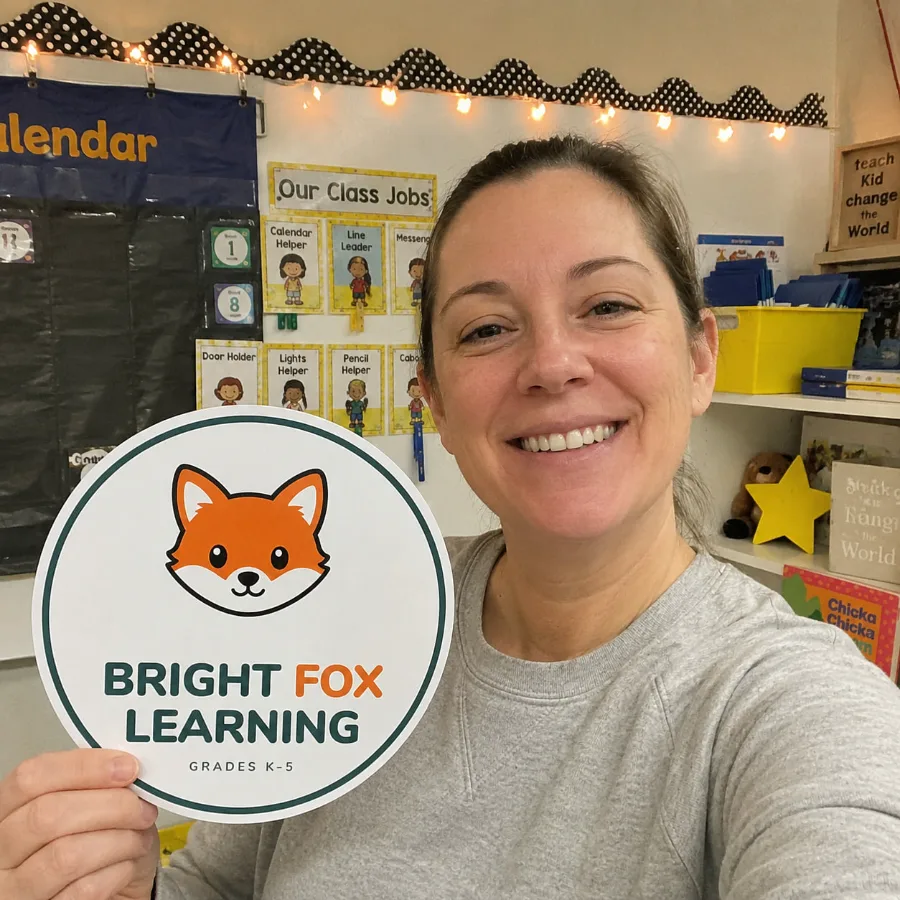
Why Ms. Emily works with us
A machine can check that every word stays inside the sounds already taught, that a key matches its page, that a sum is right. It cannot tell you whether a direction makes sense to a six-year-old, or whether a page holds more than one sitting can hold.
Ms. Emily is a U.S. elementary educator with fifteen years in elementary classrooms, most of them in Kindergarten through Grade 2, and she still works with elementary students in small-group literacy instruction and intervention. She holds a bachelor’s degree in elementary education and a state teaching license, with ongoing professional development in structured literacy, phonemic awareness and the science of reading.
A set that has been through her hands says so on its own page. The others do not claim it.
What she looks for
The seven things no checklist catches — and the reason a review takes real time rather than a tick.
Directions
Whether the instruction is clear enough to hand to a child without translating it first.
Difficulty and grade band
Whether the work sits where the cover says it does, not a year above or below.
Age appropriateness
Whether the content, the pictures and the tone belong in front of the age on the cover.
Text on a page
How much a single page is carrying, and whether a child can finish it in one sitting.
The answer key
Whether it survives a real desk — readable, in order, quick to use beside a group.
Timing
How long a page actually takes a child, which is rarely how long it looks like it takes.
The copy machine
Whether any of it still works after a school photocopier has had its turn.
Why the fox
Finn came first as a doodle and stayed because children kept reading to find him again. He appears across the sets — in the stories, the corners of worksheets, the game boards — so a child who met him in short a is glad to see him again in short i. His name works with the sounds a beginning reader has already been taught, which is why it is his name.
✓ Nothing on a page by accident
Every element on a practice page has a reason to be there, or it is cut before publishing.
✓ Nothing dated, ever
No school years, no seasons pasted on, so what you buy is still fresh the year after next.
✓ A promise about our own words
A set tells you a teacher has been through it only when that is true. You will see it on the page, or you will not see it at all — we would rather say less than have you find out we said more.